What Is a Montage? Definition, Types & Famous Examples
What is a montage? A clear guide to the film technique, how it works, the main types, famous examples, and how montage compresses time.
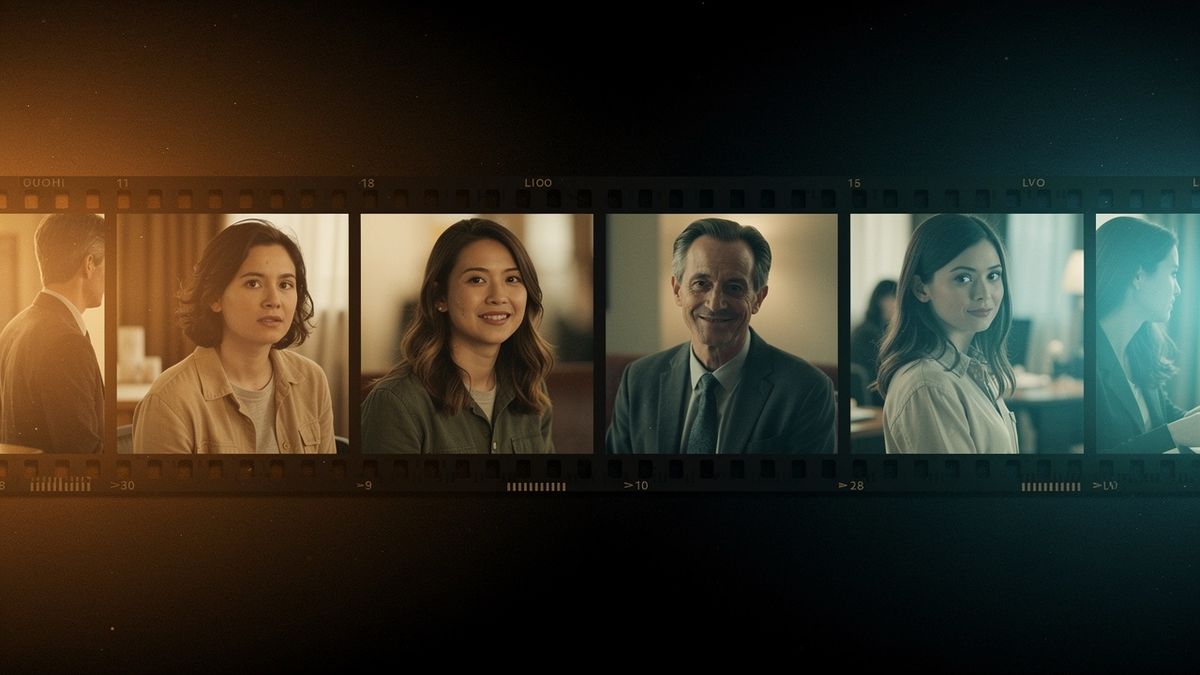
A montage is a sequence of short shots edited together to condense space, time, or information into a brief, often emotionally charged passage. A training sequence that covers months in ninety seconds, a couple falling in love across a series of moments, the rise of an empire in a minute of images — these are montages. It's one of the most recognizable techniques in film, and one of the oldest, and it rests on a simple, powerful idea: meaning emerges not just from individual shots, but from how they're joined.
This guide covers what a montage actually is, the two very different senses of the word, the main types, famous examples, and how sequences like these get assembled including in AI-assisted filmmaking.
The two meanings of "montage"
The word carries two related but distinct meanings, and confusing them is common.
In everyday film language, a montage is the familiar sequence described above: a series of short shots compressing a process or passage of time, usually set to music, the training montage, the travel montage, the getting-ready montage.
In film theory, montage means something broader and deeper: the art of editing itself, the idea that the juxtaposition of shots creates meaning beyond what any single shot contains. This sense comes largely from early Soviet filmmakers, who theorized that cutting two images together produces a third idea in the viewer's mind — an effect sometimes called the Kuleshov effect. In this sense, montage is nearly synonymous with editing as a meaning-making craft.
Both senses share the core insight: sequence and juxtaposition create meaning. The everyday montage is just the most visible application of the broader principle.
How a montage works
A montage compresses. It takes something that would take a long time to show in real time learning a skill, a relationship developing, a journey and represents it through selected fragments, letting the audience's mind fill the gaps between shots. We don't need to watch every hour of training; a handful of shots implies the whole arc.
It also associates. By placing shots next to each other, a montage draws connections cause and effect, contrast, parallel — that the shots alone wouldn't carry. And it's usually unified by something: a piece of music, a voiceover, a recurring visual motif, or a consistent tone that binds the fragments into one passage rather than a random collection.
The main types of montage
The time-compression montage. The most common — condensing a long process into a short passage. Training sequences, building something, a season changing. Time is the thing being compressed.
The thematic montage. Shots linked by an idea or emotion rather than chronology — images that together express a mood, an argument, or a theme.
The narrative montage. Advances the plot by covering a stretch of story quickly — a character's rise, a relationship's course, the spread of an event.
The Soviet / intellectual montage. The theoretical tradition — cutting shots together specifically to generate an idea or emotional response through their collision, used more for meaning than for compressing time.
The music-video style. Montage cut primarily to rhythm, where the beat drives the edit and the images serve the song.
Montage vs. related techniques
A montage is often confused with its neighbors. A cross-cut alternates between two simultaneous lines of action to build tension — it's about parallel present action, not compressed time. A jump cut is a single jarring edit within a shot of the same subject, not a whole sequence. A montage frequently uses jump cuts and other transitions inside it, but the montage is the larger structure — a sequence with a unifying purpose — while those are individual edits. Think of the montage as the paragraph and the cuts as the punctuation.
How montages get assembled — including with AI
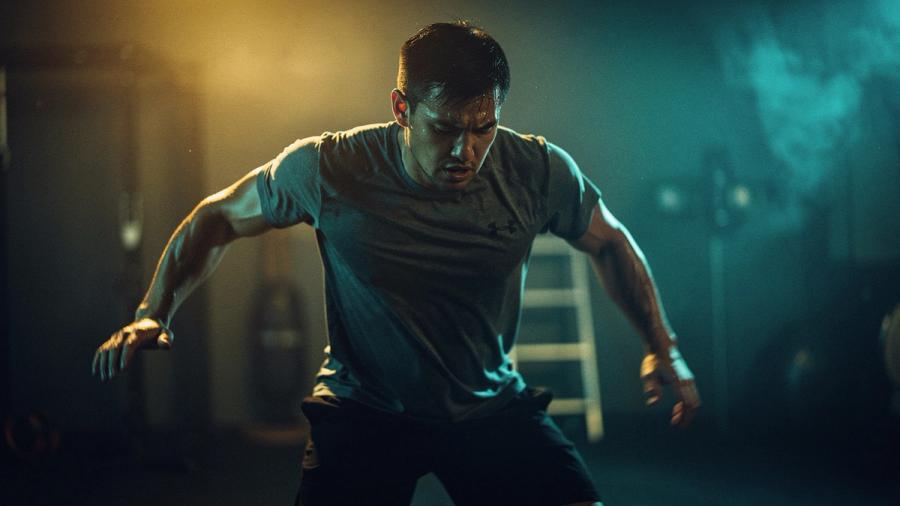
A montage is fundamentally a selection and sequencing decision: which fragments represent the whole, and in what order, to create the intended compression and feeling. The editor and director think in those terms — what's the arc, what are the beats, what binds them — and assemble the sequence to deliver it.
That's how a sequence like this comes together in Induce. Because Induce reads a script and understands each scene's purpose and emotional beat, a montage described in the script — "a training montage: weeks pass, she gets stronger" — can be broken into its component shots and assembled with the compression the moment calls for. You direct by intent, describing what the sequence should convey, and the continuity graph keeps your character consistent across every fragment, so the montage reads as one person's arc rather than a series of lookalikes. The grammar of montage — selection, sequence, unity — is unchanged; what changes is how quickly the sequence goes from script to assembled cut.
What is a montage in simple terms?
+A sequence of short shots edited together to compress time, space, or information into a brief passage like a training or travel sequence, usually set to music.
What are the types of montage?
+The main types are time-compression (condensing a long process), thematic (shots linked by idea or mood), narrative (advancing plot quickly), and the Soviet/intellectual tradition (cutting shots to generate meaning through collision).
What's the difference between a montage and a cross-cut?
+A montage compresses time by sequencing selected fragments; a cross-cut alternates between two simultaneous lines of action to build tension. Different purposes.
Where does the word "montage" come from?
+From the French for "assembly" or "editing." In film theory it refers to the meaning-making craft of editing itself, popularized by early Soviet filmmakers.
Why are montages set to music?
+Music provides the unifying thread that binds disparate shots into one passage and drives the emotional rhythm of the sequence.
Related posts
What Is a Freeze Frame? Definition & Examples
A freeze frame stops the film on a single image and turns a moment into a statement. Here is how it works and the scenes that made it iconic.
By Ranga Nikhilesh
What Is a Synopsis? How to Write One That Works
A synopsis is not a summary — it is a sales document that proves your story works. Here is what it must include and how to write one that gets read.
By Ranga Nikhilesh
What Is a Graphic Novel? A Complete Guide
What is a graphic novel? A complete guide and how creators bring panel-driven stories to the screen and how Induce plays a role in storytelling at scale.
By Prithvi Bharadwaj