What Is a Freeze Frame? Definition & Examples
A freeze frame stops the film on a single image and turns a moment into a statement. Here is how it works and the scenes that made it iconic.
What Is a Freeze Frame? Definition & Examples
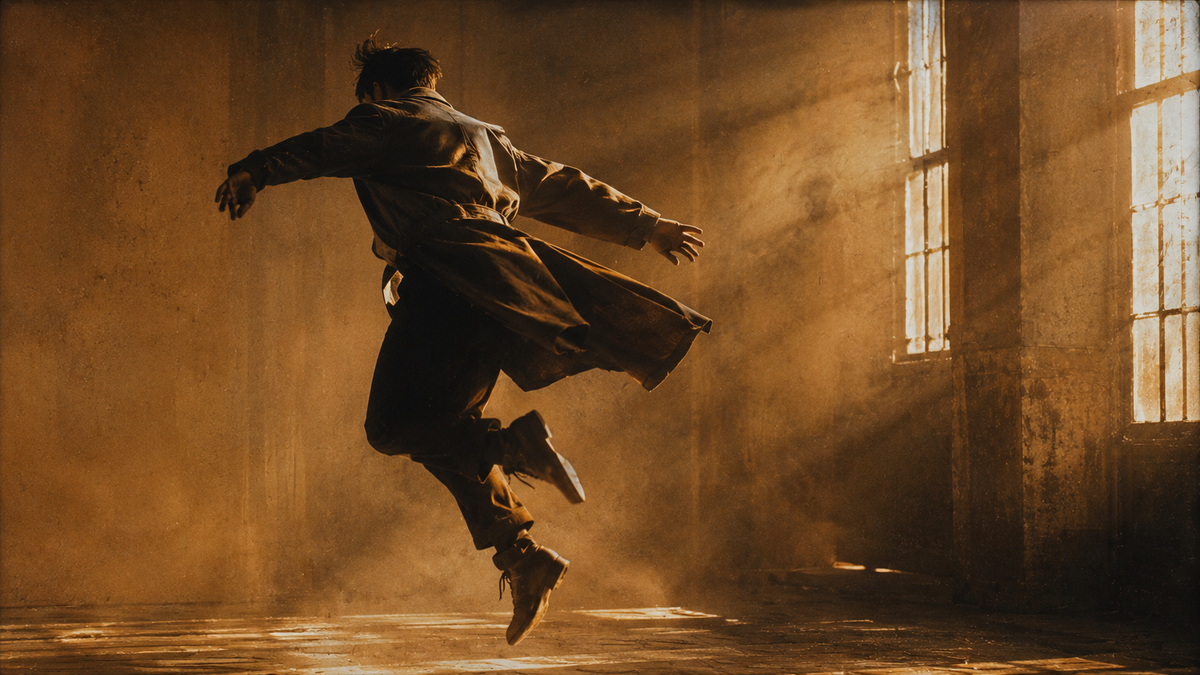
A freeze frame is a post-production effect in which a single frame of film is held still, stopping all motion and suspending the image for as long as the director chooses. The footage stops. The story continues — in the audience's mind.
It is one of the simplest techniques in filmmaking and one of the most powerful when used correctly. A freeze frame takes a moment and says: this one. This is the one that matters.
How a freeze frame works
In traditional film, a freeze frame is created in post-production by duplicating a single frame repeatedly on the timeline. The film was moving at 24 frames per second — the freeze effect holds one of those frames for as many seconds as needed. The result is an image that looks like a photograph extracted from the film, with the grain and texture of the surrounding footage.
In digital editing, the process is identical in principle. A single frame is selected and extended on the timeline. Some editors add a subtle vignette or increase the grain to emphasise the stillness and distinguish the freeze from simply pausing the footage.
The freeze frame is a post-production decision, not a camera decision. Unlike a static shot — where the camera is locked off on set — a freeze frame can be applied to any footage regardless of how it was shot. A handheld moment, a dolly push, a tracking shot — any of these can be frozen at any point in the edit.
Why directors use it
The freeze frame does three things no other technique does in quite the same way.
It stops time to make a claim. The freeze frame says: look at this. Not what came before, not what comes after — this. It is the director stepping forward and pointing at a single image and insisting on its significance. Used at the end of a film, it is an argument about how to remember what you have just seen. The character is frozen at the peak of a moment — of joy, of defeat, of ambiguity — and the film refuses to show what happens next, leaving the audience to carry that image forward.
It creates irony. When the audience knows what is coming and the freeze frame holds a character at a moment of hope or confidence, the effect is devastating. The character does not know. The image holds them there, unknowing, and the audience sits with the gap between what the character believes and what they know will follow.
It breaks the fourth wall without breaking it. A freeze frame is a formal acknowledgement that you are watching a film — the image becomes a photograph, a document, a record. It shifts the audience from immersion to reflection. Some directors use this to create distance and commentary. Others use it to create the opposite: an intimacy, a sense that this moment has been stopped because it is too important to let pass.
The scenes that made it iconic
Butch Cassidy and the Sundance Kid (1969) — the most famous freeze frame ending in cinema. Butch and Sundance charge out of the building into a hail of gunfire. The frame freezes on them mid-run, sepia-toned, and the film ends. The audience never sees them die. The freeze frame makes that death inevitable and eternal simultaneously — they are always running, always about to fall.
The 400 Blows (1959) — François Truffaut freezes on Antoine Doinel's face at the shoreline, mid-turn toward camera, at the end of the film. He has just reached the sea — his goal throughout — and has nowhere left to go. The freeze holds his expression, uncertain and searching, and the film ends there. It is one of the most studied endings in cinema precisely because the freeze frame captures a moment of absolute unresolved possibility.
Goodfellas (1990) — Scorsese uses the freeze frame throughout, not just at the end. Henry Hill's freeze frames function as chapter headings, as punctuation, as the narrator's way of emphasising what he wants the audience to remember. They have a documentary quality — these are the moments being testified to, the exhibits in the case.
Ferris Bueller's Day Off (1986) — used repeatedly and playfully, with freeze frames that acknowledge the audience directly. Here the device is comedic and meta — the freeze frame as a wink, a pause for effect, a shared moment between Ferris and the viewer.
Freeze frame vs static shot vs still image
These three terms describe different things and are frequently confused.
A freeze frame is a post-production effect: a single video frame held still in the edit. The camera may have been moving during the original shoot. The freeze effect is applied afterward.
A static shot is a production decision: the camera is locked off on set during filming. Both camera and — usually — subject may or may not move within the frame. It is a camera technique, not an edit effect.
A still image is a photograph: a single image with no surrounding footage context, no film grain, no temporal relationship to moving images before or after it.
Freeze frames in AI filmmaking
In AI filmmaking, a freeze frame is applied in the edit exactly as in traditional production — a single frame of generated footage is held on the timeline. The generation process itself is not involved; this is an editorial decision made after the footage exists.
What matters for the freeze frame at the generation stage is selecting the right moment to freeze before generation happens. If a director plans to end a scene on a freeze frame of a character mid-expression, the generation brief needs to produce footage where that expression peaks clearly and holds long enough to extract a clean frame. A brief that describes the emotional peak — "relief turning to realisation, expression shifting across two seconds" — gives the generation model enough to work with. A brief that simply says "character reacts" does not.
When directors plan freeze frame endings in Induce, the shot brief specifies the emotional peak that needs to be captured and the duration needed to find the right freeze frame in the edit. The character reference travels into the generation call the same way it does for every other shot — which means the face that gets frozen is consistent with every other frame in the film.
What is a freeze frame in film?
+A post-production effect in which a single frame of footage is held still on the timeline, stopping all motion and suspending the image. It turns a moving moment into a still image within the film and is used to emphasise a specific moment, create irony, or end a story on an unresolved image.
What is the difference between a freeze frame and a static shot?
+A freeze frame is a post-production edit effect — a frame of existing footage held still. A static shot is a production decision — the camera is locked off on set during filming. A static shot is captured on the day. A freeze frame is applied in the edit, and can be applied to any footage regardless of how the camera moved during shooting.
Why do directors use freeze frames?
+To hold a moment and insist on its significance, to create irony by freezing a character at a moment of hope or confidence the audience knows will not last, or to end a film on an unresolved image that the audience carries forward. The freeze frame is a director's claim that one specific moment is worth stopping time for.
What are the most famous freeze frame endings?
+Butch Cassidy and the Sundance Kid (1969), The 400 Blows (1959), and Thelma and Louise (1991) are the most studied. Each uses the freeze frame at the end of the film to hold characters at a moment before an implied death or loss, refusing to show the outcome and leaving the audience with the image of who the characters were rather than how they ended.
Can a freeze frame be used anywhere in a film, not just at the end?
+Yes. Scorsese uses freeze frames throughout Goodfellas as chapter markers and narrative punctuation. Tarantino uses them to emphasise moments. Edgar Wright uses them for comic timing. The ending is the most common placement because the freeze frame works particularly well as a final statement, but the technique is available anywhere in the edit.
Related posts
What Is a Synopsis? How to Write One That Works
A synopsis is not a summary — it is a sales document that proves your story works. Here is what it must include and how to write one that gets read.
By Ranga Nikhilesh
What Is a Smash Cut? Definition & Examples
A smash cut is an abrupt edit that cuts mid-action to a completely different scene for deliberate effect. Here is how it works and the best examples.
By Ranga Nikhilesh
What Is a Foil in Literature? Definition & Examples
A foil is a character who contrasts with another to reveal qualities neither could show alone. Here is the definition, how it works, and the best examples.
By Ranga Nikhilesh