What Is a Static Shot? Definition & Examples
A static shot is a locked camera with no movement — and one of the most powerful choices in filmmaking. Here is when to use it and why stillness works.
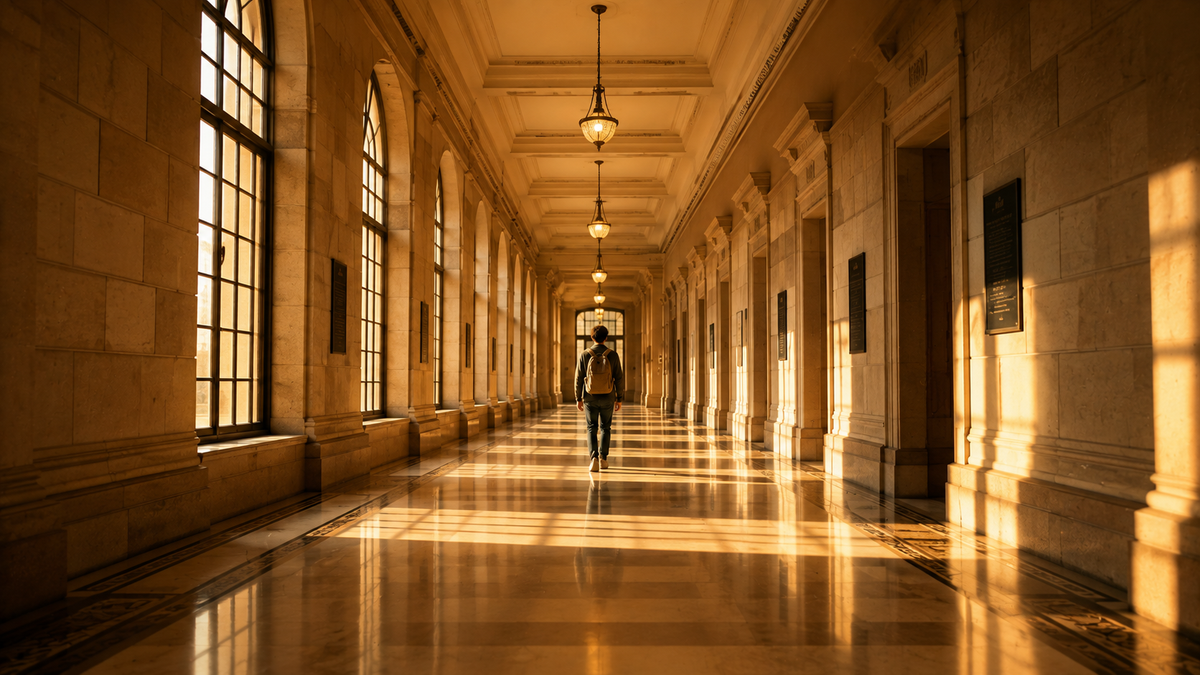
What Is a Static Shot? Definition & Examples
A static shot is a shot in which the camera does not move. It is locked off — fixed to a tripod or surface — and holds its position for the duration of the take. No pan. No tilt. No dolly. No zoom. The frame is set, and the camera stays there.
That sounds like a constraint. It is actually one of the most deliberate and powerful choices a director can make.
Why stillness is a choice, not a default
The assumption in mainstream filmmaking is that cameras should move. Camera movement signals energy, involvement, and the presence of a filmmaker making active decisions. The handheld aesthetic that has dominated action and drama for thirty years communicates immediacy and urgency. Movement says: this matters.
Stillness says something different. A static shot forces the audience to look at what is inside the frame rather than following where the frame is going. It says: here. Look here. Do not be distracted by the camera. Watch what is happening in front of it.
Used correctly, a static shot is more commanding than a moving one. The locked frame creates a sense of inevitability — what happens inside it is contained, observed, and final. The audience cannot escape into the movement. They have to sit with whatever the frame holds.
When to use a static shot
Static shots work best in four specific situations.
When the action inside the frame is enough. If the content of the shot — a performance, a confrontation, a revelation — is sufficiently compelling on its own, camera movement adds nothing. It dilutes. The best static shots are the ones where the director trusted the scene to carry itself without the camera needing to help.
When you want to create unease or dread. A locked camera watching a character from a distance, without following them, without adjusting, feels observational in a way that creates psychological pressure. The camera is not with the character — it is watching them. That detachment is deeply unsettling in the right context. Haneke uses it throughout his work. So does Kubrick. So does Yorgos Lanthimos.
When you want to emphasise composition. A static shot holds a composition for as long as the director chooses. If that composition has been carefully constructed — symmetrical, geometrically precise, meaningfully arranged — the static frame lets the audience perceive and appreciate it in a way that camera movement would destroy. Wes Anderson's entire visual language is built on this.
When you want to create contrast. In a film with predominantly moving cameras, a sudden locked shot carries enormous weight. The audience registers the stillness as a signal — something is different here, pay attention. The static shot earns its power from the context around it.
Directors who built their work on static shots
Stanley Kubrick used static shots as instruments of power and control. The locked symmetrical frames in *The Shining* (1980) and *A Clockwork Orange* (1971) feel like surveillance — the camera watching characters trapped inside its geometry, unable to move outside its logic.
Michael Haneke uses static shots to implicate the audience. The camera sits at a distance, observing events without intervening, without reacting, without providing the relief of a cutaway. *Caché* (2005) and *Funny Games* (1997) both use the locked frame to make the audience complicit in what they are watching. The camera does not flinch. Neither can you.
Yorgos Lanthimos builds his visual grammar almost entirely on static, frequently wide and slightly low-angle shots that frame characters as specimens. The stillness in *The Favourite* (2018) and *The Lobster* (2015) creates an anthropological distance — the audience is watching these people the way you watch animals in a nature documentary, from outside their experience rather than inside it.
Wes Anderson uses the static shot as an aesthetic principle. His locked, centred, symmetrical frames are recognisable as a style precisely because the camera never moves in ways that break the geometry. The static frame is not incidental to his work — it is the work.
Static shot vs locked off shot vs freeze frame
These terms are often confused.
A static shot is a camera that does not move during a live take. The camera is physically fixed. Action, character movement, and events inside the frame can still move freely.
A locked off shot means the same thing in production terminology — the camera is on a locked-off head, immovable. The terms are interchangeable.
A freeze frame is a post-production effect: a single frame from a shot is held still and repeated, freezing the image including any motion that was present. The camera may have been moving during the original take. The freeze frame effect stops the image in the edit, not the camera on set.
Static shots in AI filmmaking
A static shot is technically the simplest generation brief: no camera movement to describe, no dolly direction to specify, no Steadicam logic to account for. The brief goes to the generation model as a locked frame with a described composition and action.
In practice, it requires the same precision as any other shot type. The framing, the distance, the composition, the action inside the frame — all of these determine whether the static shot communicates what it needs to. A poorly described static brief produces a generic clip. A precise one — "wide static shot, symmetrical framing, character centred at bottom third of frame, corridor receding to vanishing point behind them, single overhead light source, no movement" — produces a clip with a specific visual logic and emotional effect.
When directors plan static shots in Induce, the shot brief specifies the composition and confirms the locked camera, and Rhapsody routes the brief to the model best suited to hold the kind of stillness and atmosphere the shot requires. The same character reference and location rules that travel through every other shot in the production travel into this one — which means the static shot holds the same visual world as the shots around it, even though the camera is not moving.
What is a static shot in film?
+A shot in which the camera does not move — it is locked off on a tripod or fixed surface and holds its position for the duration of the take. The action and characters inside the frame can still move freely. The camera itself stays still.
What is the difference between a static shot and a still image?
+A static shot is a video shot with a locked camera — action, movement, and events can occur inside the frame. A still image is a photograph: a single frozen moment with no duration and no movement. A static shot unfolds over time. A still image does not.
Why do filmmakers use static shots?
+To create psychological weight, unease, or a sense of the camera as an observer rather than a participant. To hold a composition and let the audience perceive it. To contrast with the moving shots around it, using the stillness as a signal. And to trust the content of the scene — the performance, the action, the set design — to carry the shot without the camera needing to add energy.
Which directors are known for using static shots?
+Stanley Kubrick, Michael Haneke, Yorgos Lanthimos, Wes Anderson, Roy Andersson, and Aki Kaurismaki are among the directors most associated with static camera work. Each uses stillness differently — Kubrick for geometry and power, Haneke for implication, Lanthimos for detachment, Anderson for aesthetic symmetry.
Is a static shot the same as a locked off shot?
+Yes. The terms are interchangeable in production. Both describe a camera that is fixed in position with no planned movement during the take.
Related posts
What Is a Synopsis? How to Write One That Works
A synopsis is not a summary — it is a sales document that proves your story works. Here is what it must include and how to write one that gets read.
By Ranga Nikhilesh
What Is a Smash Cut? Definition & Examples
A smash cut is an abrupt edit that cuts mid-action to a completely different scene for deliberate effect. Here is how it works and the best examples.
By Ranga Nikhilesh
What Is a Foil in Literature? Definition & Examples
A foil is a character who contrasts with another to reveal qualities neither could show alone. Here is the definition, how it works, and the best examples.
By Ranga Nikhilesh