What Is a Smash Cut? Definition & Examples
A smash cut is an abrupt edit that cuts mid-action to a completely different scene for deliberate effect. Here is how it works and the best examples.
What Is a Smash Cut? Definition & Examples
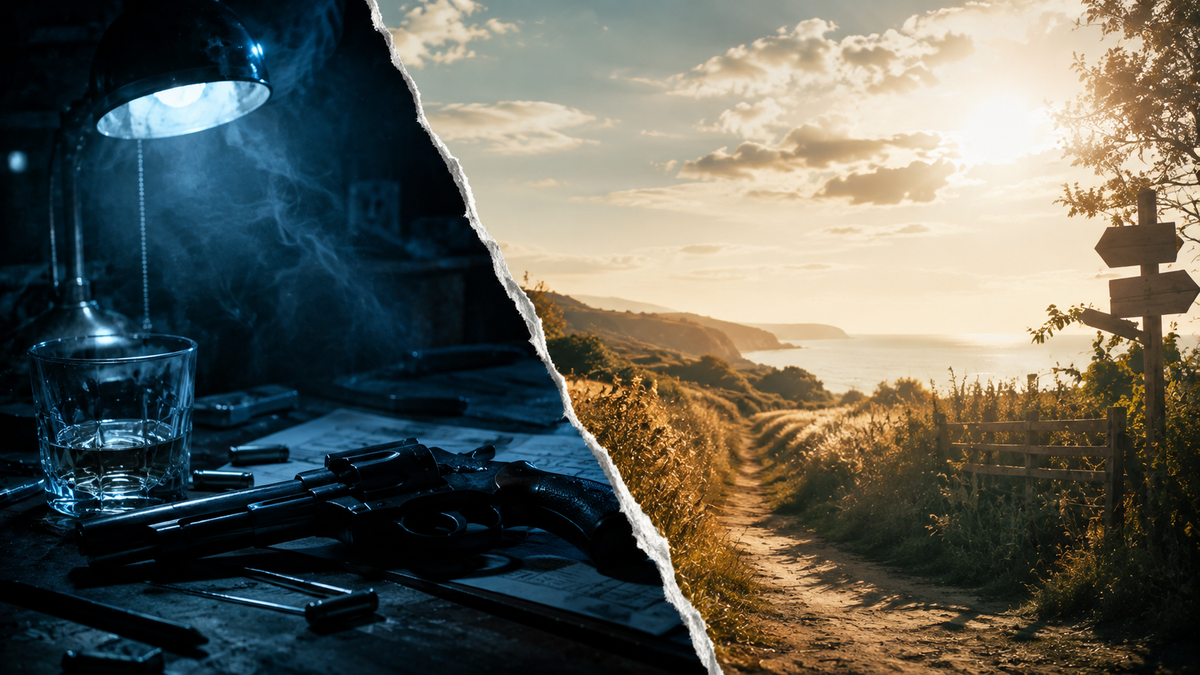
A smash cut is an abrupt, jarring edit that cuts from one scene to a completely different one mid-action, with no transition and no warning. Where a conventional cut waits for a natural pause — a sentence finished, a movement completed, a beat resolved — the smash cut hits before any of that. The action is severed. The new scene arrives like a collision.
It is the most violent punctuation available to an editor. And like all punctuation, it means something.
How a smash cut works
A conventional cut moves from the end of one moment to the beginning of the next. The edit follows the rhythm of the scene — it waits for a pause in the action, a completed gesture, a moment of rest. The cut feels invisible because it arrives where the audience expects it.
The smash cut does the opposite. It cuts before the expected moment — in the middle of a word, a scream, a laugh, an action — and lands on something tonally or spatially opposite. The contrast between where the cut came from and where it goes is the entire effect. The more extreme the contrast, the more powerful the smash cut.
The technique has two distinct modes. In the first, the smash cut creates comedy or irony — the gap between the expectation set up in scene A and the reality of scene B is where the joke or the insight lives. In the second, it creates shock or disorientation — the cut interrupts an emotional moment before the audience has processed it, which produces a sensation of whiplash that the director is using deliberately.
Why directors use it
To create comedy through contrast. The most common use of the smash cut in comedy is the undercut: a character makes a grandiose claim, a romantic declaration, or an expression of confidence, and the smash cut arrives before the audience has time to respond, landing on the absurd reality that follows. The gap between the claim and the reality is the joke. The speed of the cut is what makes it land — if the editor waits a beat, the audience has time to register the irony themselves, and the smash cut does not happen.
To create shock or emotional whiplash. A character screams in terror in one scene. Smash cut to: the alarm clock going off in the next morning. The scream that was interrupted becomes the alarm. The terror of one world crashes into the mundanity of another. Edgar Wright uses this structure repeatedly — the tonal collision is the point, and the speed is what produces the physical sensation in the audience.
To compress time aggressively. A smash cut can jump across years in a single edit. Stanley Kubrick's bone-to-spacecraft cut in *2001: A Space Odyssey* (1968) is the most famous example — the bone thrown into the air by the ape smash cuts to a spacecraft drifting through orbit, crossing millions of years in a single frame. No dissolve, no fade, no transition. The cut is the argument: these two things are the same thing.
To establish irony. A character says "nothing could possibly go wrong." Smash cut to: everything going wrong. The smash cut in this use is not just a time cut — it is a statement. The editor is saying: look at the gap between these two moments and understand what it means.
The most memorable examples
2001: A Space Odyssey (1968) — the bone-to-spacecraft cut. The most studied smash cut in cinema history. Four million years compressed into a single edit. No music change, no fade — the bone leaves the frame and the spacecraft arrives. The cut argues that human technology and the bone are the same object at different scales of development.
The Silence of the Lambs (1991) — Jonathan Demme uses a smash cut in the film's climax that has been debated ever since. The cut between two scenes creates the impression that events are happening simultaneously when they are not. The smash cut is a misdirection — an editorial lie that the film then corrects. It is one of the few uses of a smash cut as a deliberate narrative deception.
Baby Driver (2017) — Edgar Wright builds his entire editorial style around aggressive cuts, and Baby Driver is the fullest expression of that. The smash cuts in the film's action sequences are timed to musical beats — the cut is the beat, the impact is the rhythm. The smash cut becomes musical punctuation.
Breaking Bad — Vince Gilligan and his editors use the smash cut across the series, most effectively in the cold opens. A scene of ominous, uncontextualised action — a pair of trousers floating through the desert, a pile of cash on a motel bed — smash cuts to the title card and then to the story. The cold open and the main narrative are separated by the smash cut, which signals to the audience that these two realities will eventually collide.
Smash cut vs jump cut vs match cut
These three edit types are distinct techniques that are frequently confused.
A smash cut is defined by its tonal or spatial violence — it cuts abruptly from one scene to a completely different one, creating deliberate contrast or shock. The content on either side of the cut is typically unrelated or tonally opposed.
A jump cut is a cut between two shots of the same subject from the same angle, creating a jarring skip forward in time. It creates discontinuity within a single scene rather than between scenes. Jean-Luc Godard's use in *Breathless* (1960) is the canonical example.
A match cut is a cut that finds a visual or thematic correspondence between two different shots — cutting from a shape in one scene to a similar shape in the next. Kubrick's bone-to-spacecraft is also a match cut (both are elongated objects spinning through space), which is why it functions so powerfully: it is simultaneously a smash cut and a match cut.
Smash cuts in AI filmmaking
A smash cut is an editorial decision — it happens in the edit, not at the generation stage. But the generation stage has to produce footage that supports the cut: both sides of the smash cut need to be generated with the contrast in mind.
If a smash cut moves from a character's scream to a quiet morning scene, the generation brief for the scream needs to produce footage with a clear, interruptible emotional peak — not a shot that winds down naturally to silence. The brief for the morning scene needs to establish its tonal contrast immediately, in the first frames. A smash cut into a scene that takes three seconds to establish its tone does not land.
When planning smash cut sequences in Induce, the shot briefs for both sides of the cut are written in relation to each other — the contrast that makes the smash cut work is built into the brief before generation happens, not discovered in the edit. For the related technique of holding a single frame for effect rather than cutting away from it, the freeze frame post covers the opposite end of editorial punctuation.
What is a smash cut?
+An abrupt, jarring edit that cuts from one scene mid-action to a completely different scene, with no transition and no warning. It is defined by the tonal or spatial violence of the cut and the contrast between the two scenes it connects. The smash cut is used for comedy, shock, time compression, and irony.
What is the difference between a smash cut and a jump cut?
+A smash cut cuts between two different scenes — the content on either side is unrelated or tonally opposed, and the contrast is the effect. A jump cut cuts between two shots of the same subject from the same angle, creating discontinuity within a single scene. A smash cut is between scenes. A jump cut is within a scene.
What is the most famous smash cut in film history?
+Stanley Kubrick's bone-to-spacecraft cut in 2001: A Space Odyssey (1968) — a prehistoric ape throws a bone into the air, and it smash cuts to a spacecraft in orbit, crossing millions of years in a single edit. It is the most studied example of the technique because it is simultaneously a smash cut (abrupt tonal jump) and a match cut (visual correspondence between the two objects).
Why do directors use smash cuts?
+To create comedy through the gap between expectation and reality, to create shock or emotional whiplash by interrupting a moment before it resolves, to compress time aggressively, or to establish irony by juxtaposing two tonally opposed realities. The speed of the cut is what produces the effect — a beat of delay turns a smash cut into a conventional cut.
Who uses smash cuts most effectively?
+Stanley Kubrick for conceptual time compression, Edgar Wright for rhythmic comedy and action, and Vince Gilligan's team on Breaking Bad for tonal disorientation in cold opens. Each uses the technique differently — Kubrick for argument, Wright for rhythm, Gilligan for misdirection — which is why the smash cut reads so differently across their work despite being the same technical operation.
Related posts
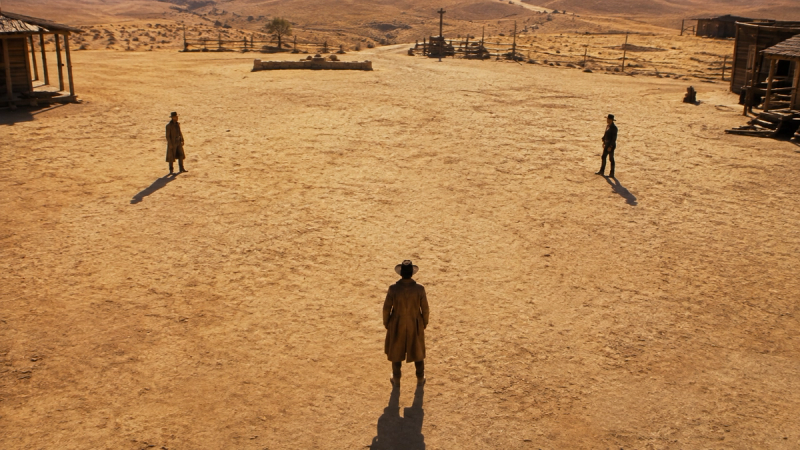
What Is a Mexican Standoff? The Film Trope Explained
A Mexican standoff is a three-way deadlock where no one can act without being destroyed. Here is where it came from and how it works on screen.
By Ranga Nikhilesh
What Is a Montage? Definition, Types & Famous Examples
What is a montage? A clear guide to the film technique, how it works, the main types, famous examples, and how montage compresses time.
By Prithvi Bharadwaj
Script to Video AI: How It Works in 2026
Script-to-video AI turns a screenplay into a finished cut. Here's how the technology works in 2026, why script-first beats prompt-first.
By Prithvi Bharadwaj