What Is It Called When an Actor Stays in Character?
When an actor stays in character between takes and throughout a production, it's called method acting- here is how it works.

When an actor stays in character between takes, during breaks, or throughout an entire production — never stepping out of the character's mindset even off-camera — it's most commonly called method acting, and the specific practice is often described as staying in character or total immersion. It's one of the most talked-about (and most misunderstood) techniques in acting, and it goes by several names depending on who you ask.
This guide covers what the technique is called, where it comes from, why actors use it, and what it actually looks like in practice.
The names for it
Method acting is the broadest term — an approach to performance that draws on real personal emotion and experience to create authentic characters. Staying in character is one technique within this family, not the definition of it.
Total immersion or full immersion is the specific practice of remaining in the character's mindset continuously throughout a shoot or production — not just in front of the camera but between takes, on set, and in daily life.
Living the role is an informal description of the same thing — the idea that the actor doesn't play the character, they live as them for the duration of production.
The practice is also sometimes called deep character work or described as the actor refusing to break character, though those are more descriptive than technical terms.
Where it comes from
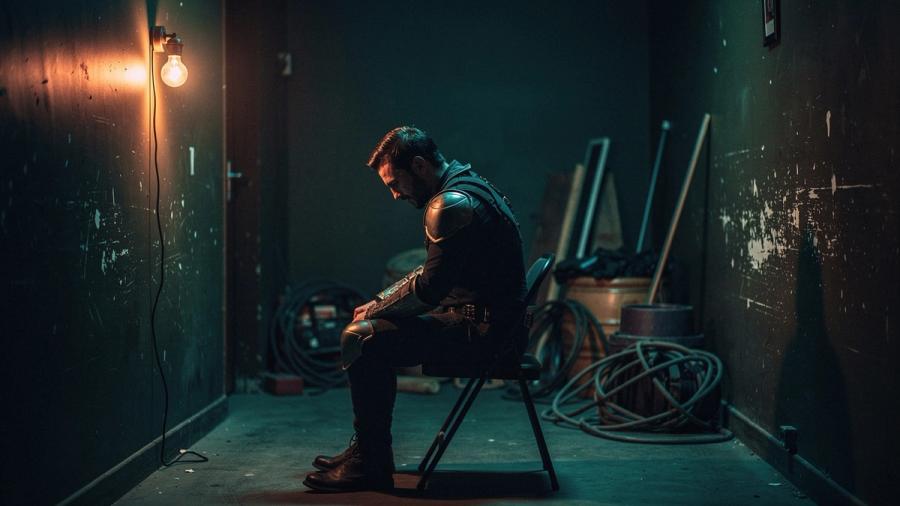
The technique traces to Konstantin Stanislavski, the Russian theatre practitioner whose early-twentieth-century "system" was the first rigorous approach to truthful acting. Stanislavski wanted actors to genuinely feel their characters' emotions rather than imitate them from the outside. His system emphasized emotional memory, character objectives, and — importantly — the idea of living fully in the character's circumstances.
In mid-twentieth-century America, Lee Strasberg developed Stanislavski's ideas into what became known as "The Method" at the Actors Studio. Strasberg's approach encouraged actors to use their own emotional memories to fuel performance — and in its most intensive form, to maintain the character's emotional reality outside the scene as well.
Other teachers — Stella Adler, Sanford Meisner — developed their own branches from the same root, with different attitudes toward immersion. Not all method-trained actors stay in character between takes; the immersive practice is one end of a spectrum.
Why actors do it
The argument for total immersion is consistency. A character's emotional state — their grief, their anger, their fear — takes time to build and can be hard to re-access between takes. Breaking character and then returning to a difficult emotional place on cue is its own skill, and some actors find it easier to maintain the state continuously than to drop it and rebuild.
There's also the argument for authenticity: that a performance built on a genuinely held emotional reality, rather than one reconstructed for each take, reads differently on screen. Whether that's true is debated, but it's the logic behind the practice.
The controversy
Staying in character throughout a production is genuinely controversial, and the criticism is worth understanding. Maintaining a dark character's emotional state for weeks or months carries a real psychological cost — some actors have spoken about the toll it takes. And the immersive practice sometimes bleeds into behavior on set that makes colleagues' work harder or creates a difficult environment.
Many critically acclaimed actors reject the practice entirely, arguing — often wryly — that acting is professional work, not identity replacement, and that craft and imagination can access the same truth without the personal cost. Their results tend to support them.
The honest picture is that "method acting" covers a wide spectrum. Its disciplined, technique-driven core — emotional preparation, character objectives, genuine feeling — is very different from the headline-grabbing immersion that gets the most attention. Most working actors use elements of the method without living the role 24 hours a day.
How it connects to storytelling
The reason staying in character can produce powerful results — and the reason the practice exists at all — is that a character who holds together consistently across an entire performance is more believable than one that feels like a different person from scene to scene. Emotional continuity, behavioral consistency, a through-line that holds from first scene to last — these are what make a character feel real.
That principle extends beyond performance into storytelling itself. In Induce, story-state memory tracks what a character knows, what they've experienced, and how they've changed across the whole timeline of the film — so their behavior in scene eight is consistent with everything that happened by scene three. The method actor achieves this through sustained psychological commitment; Induce achieves it architecturally, through persistent memory of the character's state across every shot. Both are solving the same problem: keeping a character coherent across the full length of a story.
What is it called when an actor stays in character?
+The practice is most commonly called method acting, and the specific technique of remaining in character throughout a production is called total immersion or living the role.
Why do actors stay in character between takes?
+To maintain a consistent emotional state that's difficult to rebuild from scratch between takes, and to sustain the authenticity of the performance by genuinely living in the character's reality rather than switching in and out.
Is staying in character the same as method acting?
+Not exactly. Method acting is a broader family of techniques; staying in character between takes is one specific, intensive technique within it. Many method-trained actors don't use total immersion.
What's the point of never breaking character?
+The argument is consistency and authenticity — that a performance built on a continuously held emotional reality reads differently than one reconstructed per take. It's a contested claim, and many accomplished actors don't use the technique.
Is staying in character always good for the performance?
+Not necessarily — and it can come at a psychological cost. Many acclaimed actors produce equally powerful performances without total immersion, using technique and imagination rather than sustained psychological commitment.