Controllable AI Director: How to Direct AI Video
A controllable AI director lets you give creative direction- angle, lens, intent rather than prompting blind. Here's how it works.
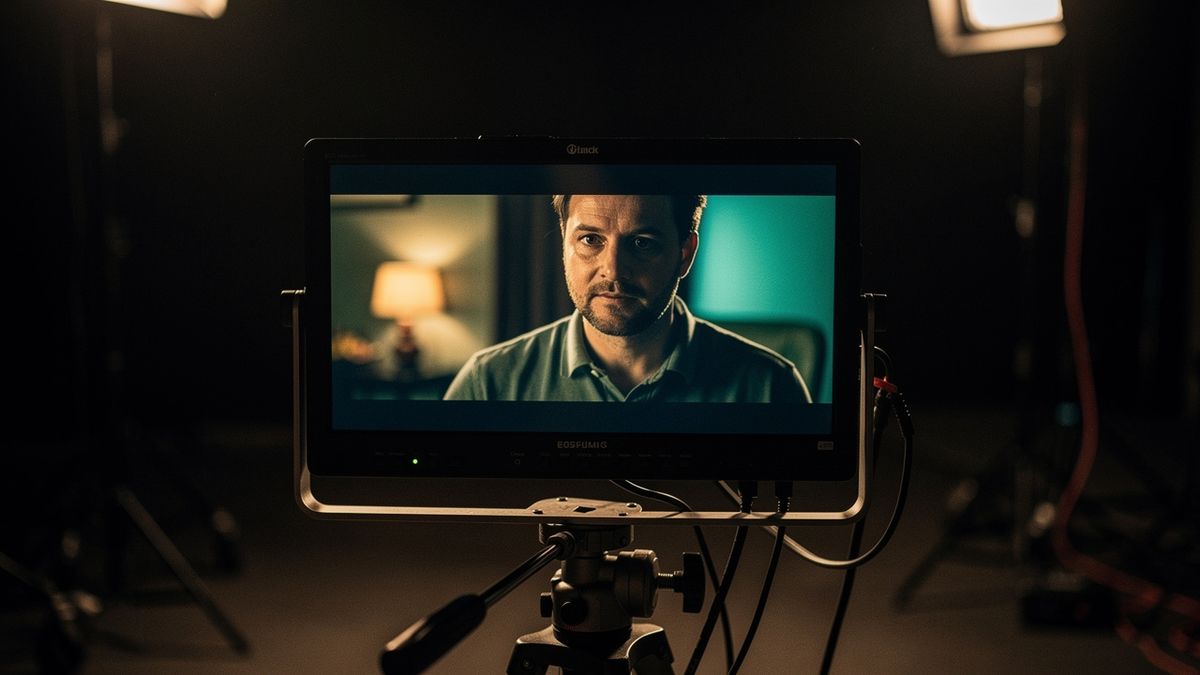
Most AI video tools ask you to prompt. You describe a scene, get a clip, describe it again, get another. The tool has no opinion about what the scene should do, no read on whether the framing serves the moment, and no memory of what came before. You're not directing — you're describing, repeatedly, and hoping the output matches the film in your head.
A controllable AI director flips this. Instead of prompting fragment by fragment, you give creative direction — what a scene should feel, what a shot should accomplish, how a moment should land — and the system composes accordingly. The difference is the same as the difference between a director and a production assistant: one makes decisions, the other executes instructions.
What "controllable" means in AI video
"Controllable" in this context means two distinct things that most people conflate.
The first is parameter control — the ability to specify exact attributes of a shot: angle, lens, lighting, pacing, depth of field. This is what most tools mean when they call themselves controllable. You can dial in settings on individual clips, the way you'd set up a camera manually.
The second — and far rarer — is intent control: the ability to direct what a moment should do rather than what it should look like. "Make this land like the character's lowest point." "This scene should feel like dread without showing anything scary." That's direction, and it requires the tool to understand the story, not just render a prompt.
The most capable AI director tools offer both: the parameter control for when you know exactly what you want, and the intent layer for when you're thinking like a director rather than a cinematographer.
Why prompting isn't directing
The distinction matters because filmmaking is a decision chain. A director reads a script and makes hundreds of decisions — what each scene is for, what emotional work it does, how it connects to what came before and after. Those decisions govern every choice downstream: framing, lighting, performance, pacing.
A prompt box asks you to bypass all of that and describe pixels. The result is that you spend your creative energy managing the tool instead of directing the film. And because each prompt is independent — no memory of the project, no understanding of the story — you're rebuilding context from scratch every single generation.
An AI director that's genuinely controllable reads the script as a whole, understands what each scene is doing in the story, and makes compositional choices accordingly. You give direction; it executes — and when you want to override, you override one shot, not the whole film.
What a controllable AI director actually does
A genuine controllable AI director handles a stack of decisions automatically while giving you director-grade override at any level:
Script understanding. It reads the screenplay and knows what each scene is for — not just what's in it, but what narrative work it does, what the emotional register is, how it connects to the surrounding scenes.
Autonomous composition. A virtual director of photography composes each shot from the beat: wide for a moment that needs space, close for one that needs intimacy, the lens and blocking chosen to serve the scene's intent rather than a generic default.
Intent translation. Creative direction in plain language — "this should feel isolated," "match the energy of the scene before it" — translates into specific compositional choices without you specifying every parameter.
Local override. When you want to take the controls on a specific shot — angle, lens, lighting, pacing, performance — you override it locally, without disturbing the continuity of the scenes around it.
Continuity. The whole cut holds together because the director is working from a single understanding of the film, not generating each shot in isolation.
Where Induce fits
Induce is built around this model. Upload a screenplay and a virtual director of photography composes each shot from its emotional beat — reading the scene's intent and translating it into framing, lens, and blocking choices automatically.
When you want to take over, you override any shot in plain language or with specific parameters, locally, without re-rolling the surrounding cut. And because the Narrative Intelligence layer holds the whole story — what each scene is for, what each character is doing at this point in their arc — the direction is coherent across the whole film, not shot by shot in isolation. You direct. The tool executes. That's the relationship a controllable AI director is supposed to have.
What is a controllable AI director?
+An AI filmmaking tool that lets you give creative direction — intent, framing, tone — rather than describing shots by prompt, and that composes each frame accordingly while giving you override control on any individual shot.
Which AI video tools support shot overrides?
+Tools vary widely. Induce supports local shot overrides — angle, lens, lighting, pacing, performance — on any individual shot without re-rolling the rest of the cut. Most clip-based tools require regenerating the full clip.
What's the difference between parameter control and intent control?
+Parameter control lets you specify what a shot looks like (angle, lens). Intent control lets you specify what it should do ("this should feel like her last chance") — a higher-level direction the tool interprets compositionally.
Can I still control specific shots if the AI is directing?
+Yes. A good controllable AI director composes automatically by default and gives you override on any shot when you want it — both levels of control, not an either/or.
Is there an AI tool that reads a script and directs it?
+Yes Induce reads a full screenplay, breaks it into scenes and shots, and composes each frame from the scene's intent, with director-grade override on any shot.
Related posts

What Is a Synopsis? How to Write One That Works
A synopsis is not a summary — it is a sales document that proves your story works. Here is what it must include and how to write one that gets read.
By Ranga Nikhilesh

What Is a Smash Cut? Definition & Examples
A smash cut is an abrupt edit that cuts mid-action to a completely different scene for deliberate effect. Here is how it works and the best examples.
By Ranga Nikhilesh
What Is a Foil in Literature? Definition & Examples
A foil is a character who contrasts with another to reveal qualities neither could show alone. Here is the definition, how it works, and the best examples.
By Ranga Nikhilesh