AI Video Continuity: How to Keep Characters and Story Consistent
AI video continuity is the hardest unsolved problem in generative film. Here's why characters drift between shots and how continuity works.

Continuity is the invisible glue of film. When a character appears in scene 1 and scene 40 and looks like the same person — when the room they're in has the same light quality, the same layout — the audience is watching a film. When those things drift, they're watching a production error. Human film crews dedicate entire departments to continuity; a script supervisor tracks every detail across a shoot to make sure the cut holds together. AI video has historically had no equivalent. The result is a category of tools that produce beautiful individual shots and fall apart the moment you need a second one.
This guide covers why AI video continuity breaks, what continuity actually requires, and what an architecture-level solution looks like.
Why AI video loses continuity
Most AI video generators have no memory. Each generation is stateless — it starts fresh from whatever prompt you give it, with no awareness of what came before. That's fine for a single clip. For a film, it means every shot is a roll of the dice on your character's face, the scene's look, and the emotional register.
Even tools that support reference images — where you upload a photo of your character to anchor each generation — are doing a shallow version of continuity. They're matching a visual reference, not tracking a character's state across a story. If your character learns something in scene 3, a reference-image tool has no way to know that should change how they appear in scene 8. It's appearance consistency, not story continuity.
Real continuity is much more than a face matching across clips.
What continuity actually requires
A film has multiple layers of continuity that all have to hold simultaneously:
Visual continuity. The same character looks the same: face, build, wardrobe appropriate to the scene, hair and appearance consistent with what's just happened to them. The same location has the same layout, light quality, and condition across the shots set there.
Prop continuity. The envelope handed to a character in scene 4 is in their pocket in scene 7. Objects with narrative weight persist across the story.
Tonal continuity. The color grade, mood, and visual language of the film hold across scenes — not lurching between styles from shot to shot.
Narrative continuity. This is the deepest layer: what a character knows, what they've experienced, how their arc has changed them — all of this governs their behavior throughout the film. A character who's just lost everything shouldn't carry themselves the same way they did in act one.
Most AI tools handle none of these systematically. The best ones handle the first partially, through reference images. Almost none handle the last one at all.
Architecture-level continuity vs. per-shot patches
There are two approaches to the problem, and they produce very different results.
Per-shot patching treats continuity as a fix — you generate a shot, notice it drifted, re-generate with additional reference material, hope it's closer this time. This is most people's current workflow. It's slow, manually intensive, and still produces inconsistency, because each generation is still stateless.
Architecture-level continuity builds the memory into the pipeline from the start. The system reads the whole script, builds a persistent map of every character, location, prop, and mood state, and every shot generates against that shared source of truth. Continuity isn't a check you run after generation — it's the condition under which every generation happens. Changing a detail doesn't require regenerating everything; the system marks only the affected shots as stale and re-generates those.
The difference is structural. One approach fights the tool's statelessness; the other solves it.
What to look for in an AI video continuity tool
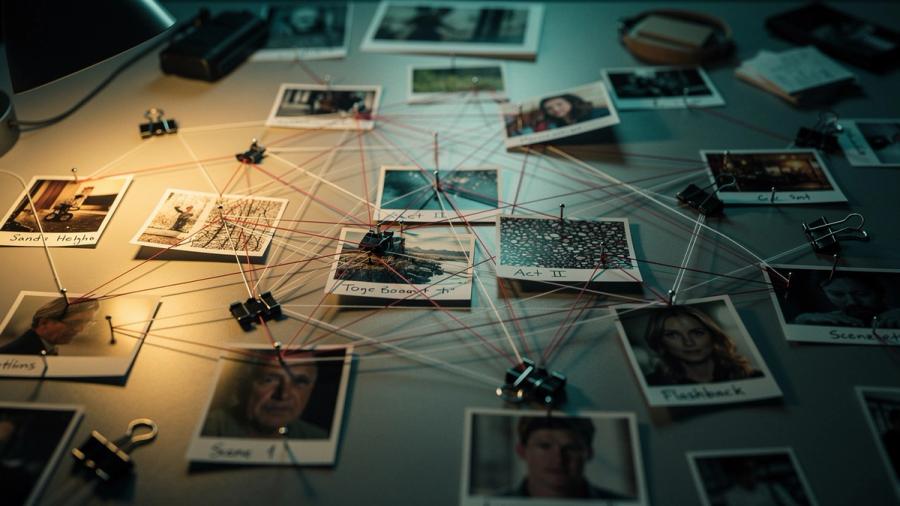
Does it read the script as a whole? A tool that reads your full screenplay before generating anything has the raw material for real continuity — it knows every character, every location, every narrative event from the start.
Does it build a persistent character memory? Characters should exist as persistent entities with tracked states, not as reference images pasted per-prompt.
Does it track narrative state? What a character knows and has experienced at each point in the timeline should govern how they're generated in later scenes.
Is continuity the default, or an option? Architecture-level continuity is on from the moment you upload a script. Per-shot continuity requires you to manually manage it for every generation.
Does changing one thing re-roll everything? A well-built system re-generates only the shots affected by a change, not the whole cut.
Where Induce fits
Induce was built to solve this at the architecture level. When you upload a screenplay, Induce builds a continuity graph — a persistent memory of every character, wardrobe detail, location, prop, and mood across the entire timeline. Every shot generates from that single source of truth, so your protagonist looks like your protagonist in scene 1 and scene 40 without reference uploads or manual setup.
Story-state memory tracks what each character has learned and experienced, so their narrative state informs how they're rendered later in the film. And when you update a character or revise a scene, Induce diffs the change and re-generates only the affected shots not the entire cut. Continuity isn't a feature you turn on. It's the default state of every project.
What is AI video continuity?
+The ability of an AI video system to keep characters, locations, props, and story logic consistent across multiple shots and scenes so a film holds together rather than looking like a sequence of unrelated clips.
Why do AI video characters look different between shots?
+Because most generators are stateless — each clip is generated independently with no memory of previous generations. Even with reference images, the model is matching appearance, not tracking a character across a story.
What's the difference between reference-image continuity and architecture-level continuity?
+Reference images anchor visual appearance per shot — a shallow fix. Architecture-level continuity builds a persistent memory of every story element into the pipeline from the start, so every shot generates from a shared source of truth without manual setup.
Can AI track what a character has experienced across a story?
+Most tools can't. Induce's story-state memory tracks character knowledge and arc across the full timeline, so narrative continuity holds alongside visual continuity.
Do I have to re-generate everything if I change something?
+With Induce, no it diffs the change and re-generates only the affected shots. With most other tools, yes — every affected shot has to be regenerated manually.
Related posts

What Is a Synopsis? How to Write One That Works
A synopsis is not a summary — it is a sales document that proves your story works. Here is what it must include and how to write one that gets read.
By Ranga Nikhilesh

What Is a Smash Cut? Definition & Examples
A smash cut is an abrupt edit that cuts mid-action to a completely different scene for deliberate effect. Here is how it works and the best examples.
By Ranga Nikhilesh
What Is a Foil in Literature? Definition & Examples
A foil is a character who contrasts with another to reveal qualities neither could show alone. Here is the definition, how it works, and the best examples.
By Ranga Nikhilesh