Famous Villains: What Makes a Great Antagonist
The most famous villains in film history examined — what makes them unforgettable, the five archetypes that recur, and how to write one that holds.
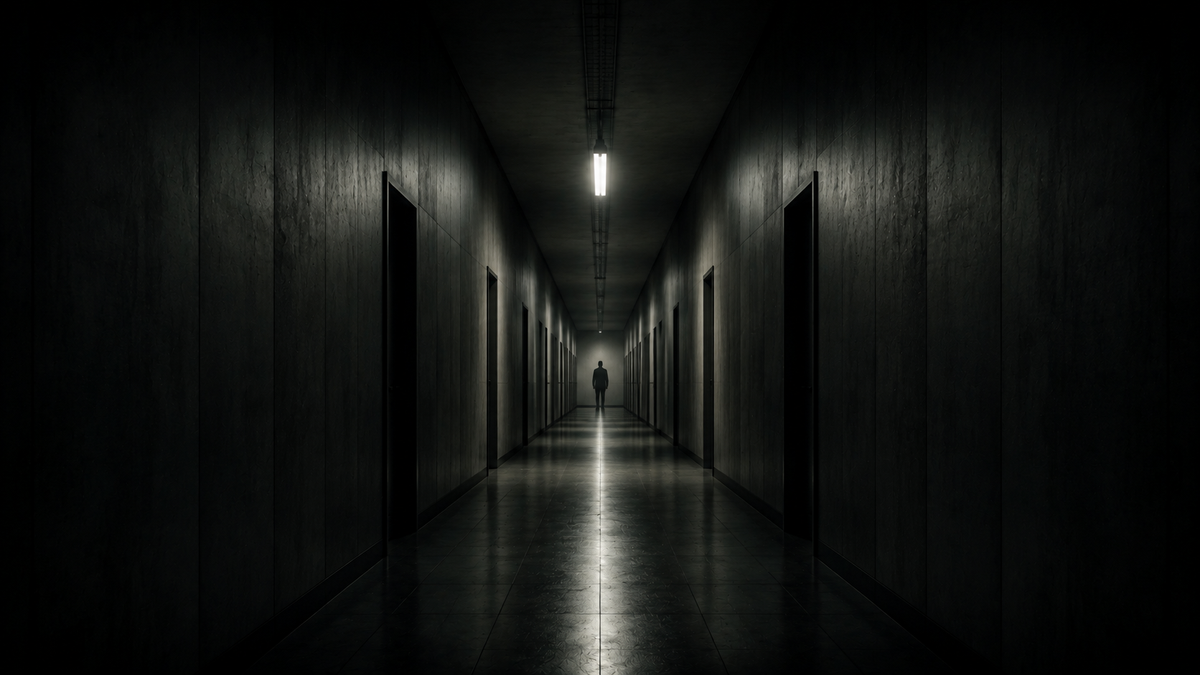
The most famous villains in film history are not remembered because they are evil. They are remembered because they make sense. Hannibal Lecter, Anton Chigurh, the Joker, Hans Landa — none of them are random. Each operates from a logic so complete and so alien to the audience's own that you cannot look away. That is the thing every memorable villain shares. The horror is not the act. It is the coherence.
The villain as a mirror
A villain works when they illuminate something about the protagonist — or about the audience — that would otherwise stay hidden. Without the antagonist, the hero has nothing to push against and no reason to become who they need to become.
This is why the great villain pairings in cinema are so durable. Hannibal Lecter and Clarice Starling in *The Silence of the Lambs* (1991) are not simply hunter and hunted. Lecter sees Clarice more clearly than anyone in her life does. He is the monster who tells the truth. Hans Landa in *Inglourious Basterds* (2009) is the smartest man in every room he enters, and the film's tension comes entirely from watching the protagonists try to survive that intelligence. The Joker in *The Dark Knight* (2008) is the argument that the system Bruce Wayne defends is itself the problem — and the film never fully refutes him.
In each case, the villain is not decoration. They are the engine.
What separates iconic from forgettable
Most on-screen villains are forgotten because they exist only to be defeated. They have no interior life, no coherent motivation, no perspective the audience might — uncomfortably — understand. They are obstacles with faces.
The famous ones are different in a consistent way. They want something, and that something is specific and explicable. Anton Chigurh in *No Country for Old Men* (2007) is not a killer for hire. He is a man with a philosophy about fate and chance so rigorously applied that the film becomes a kind of theological argument. Nurse Ratched in *One Flew Over the Cuckoo's Nest* (1975) believes she is helping. That belief is the most terrifying thing about her. Amy Dunne in *Gone Girl* (2014) is a woman who understood exactly what was expected of her and decided to weaponise it.
The villain's motivation does not need to be sympathetic. It needs to be coherent. An audience can follow a logic they find repugnant. They cannot engage with a motivation that is simply "evil" with no further depth.
The five types that recur
Across the history of cinema, famous villains tend to cluster around five archetypes — not as rigid categories but as dominant shapes.
The ideologue. The villain who believes, completely and without irony, in a system the film regards as monstrous. Hans Landa. Amy Dunne. Roy Batty, arguably. Their menace comes from conviction. They are not confused or conflicted. They have thought this through.
The mirror. The villain who is the protagonist's dark reflection — the person the hero could have become under different circumstances. Magneto and Professor X. The Joker and Batman. Commodus and Maximus. These pairings derive their power from proximity: the distance between hero and villain is not nature but choice.
The force of nature. The villain without psychology — or with psychology so compressed it reads as pure threat. Anton Chigurh. Michael Myers in his original form. Jaws. These work not through interiority but through inevitability. The audience dreads them the way you dread weather.
The charming predator. The villain you like despite everything you know. Hannibal Lecter. Hans Gruber. Tom Ripley. Their watchability is the trap. The film lets you enjoy their company and then implicates you in having done so.
The system. The villain who is not a person but an institution, a structure, a set of incentives that produces destruction without anyone deciding to be evil. The hospital in *One Flew Over the Cuckoo's Nest*. The corporate apparatus in *There Will Be Blood*. The economy in *Parasite*. These are the hardest to write because they require the film to make an argument, not just a character.
Writing a villain that holds
The practical question for any filmmaker is not "which famous villain should I imitate" but "what does my antagonist actually want, and why does that want make sense given who they are."
The answer should take more than one sentence. If it takes one sentence — "they want power," "they want revenge" — the character is not yet fully formed. A villain's motivation needs to be specific enough that you could trace it back to a formative event or belief, and specific enough that it rules out certain actions as inconsistent with who they are. Chigurh would not beg. Lecter would not be crude. Landa would not make a mistake out of hatred. The constraint is the character.
The second question is what the villain's existence reveals about the world of the film. Every great antagonist is also a lens. What do they make visible that the story could not otherwise show?
How villain consistency becomes a production problem
A well-written villain is also a production challenge. A character this precisely defined — specific physicality, a specific register of speech, a specific set of behavioural rules — has to hold across every scene, every angle, every cut. In a traditional production, that is a performance question. In AI filmmaking, it is a generation question.
When directors work in Induce, a character like this is defined in the Project Memory Graph before a single frame is generated. The physical description, the behavioural logic, the visual markers that make the character recognisable are locked as references. Every shot that features the character is generated and verified against those references before it reaches the timeline. The villain who is precise on the page needs to be equally precise on screen — and consistency across 40 or 60 generated clips does not happen by accident.
Who are the most famous villains in film history?
+The most cited include Hannibal Lecter (*The Silence of the Lambs*), Darth Vader (*Star Wars*), the Joker (*The Dark Knight*), Anton Chigurh (*No Country for Old Men*), Hans Landa (*Inglourious Basterds*), Nurse Ratched (*One Flew Over the Cuckoo's Nest*), and Hans Gruber (*Die Hard*). What they share is not the scale of their villainy but the coherence of their motivation and the precision of their characterisation.
What makes a villain memorable?
+Coherent motivation, specificity of character, and a function within the story beyond being an obstacle. The most memorable villains illuminate something about the protagonist or the world of the film that would otherwise stay hidden. They have an interior logic the audience can follow even while disagreeing with it.
What is the difference between a villain and an antagonist?
+An antagonist is any force that opposes the protagonist — it can be a person, a system, a circumstance, or the protagonist's own psychology. A villain is specifically a human antagonist who acts from deliberate malice or a coherent opposing value system. All villains are antagonists; not all antagonists are villains.
Why do audiences sometimes root for villains?
+Because the villain is often the most fully realised character in the film — the one with the clearest sense of what they want and why. The charming predator archetype (Lecter, Gruber, Ripley) works by making the audience complicit: you enjoy their company, and the film uses that enjoyment against you. The ideologue archetype works by being right about something the protagonist and the audience would prefer to ignore.
Can a villain be the protagonist?
+Yes, and the best examples reframe the question of what the story is about. *Parasite* (2019) begins with characters who function as villains by the film's own moral logic and asks the audience to hold that alongside sympathy. *There Will Be Blood* (2007) follows a man becoming a monster across a full runtime. *Joker* (2019) is entirely the villain's origin story. In each case, the film earns the switch by making the character's interior life specific enough to sustain a protagonist's arc.
Related posts
What Is a Synopsis? How to Write One That Works
A synopsis is not a summary — it is a sales document that proves your story works. Here is what it must include and how to write one that gets read.
By Ranga Nikhilesh
What Is a Smash Cut? Definition & Examples
A smash cut is an abrupt edit that cuts mid-action to a completely different scene for deliberate effect. Here is how it works and the best examples.
By Ranga Nikhilesh
What Is a Foil in Literature? Definition & Examples
A foil is a character who contrasts with another to reveal qualities neither could show alone. Here is the definition, how it works, and the best examples.
By Ranga Nikhilesh