What Is Suspense? How Filmmakers Build It
Suspense is when the audience knows more than the characters. Here is how Hitchcock defined it, the techniques that build it, and what makes it collapse.
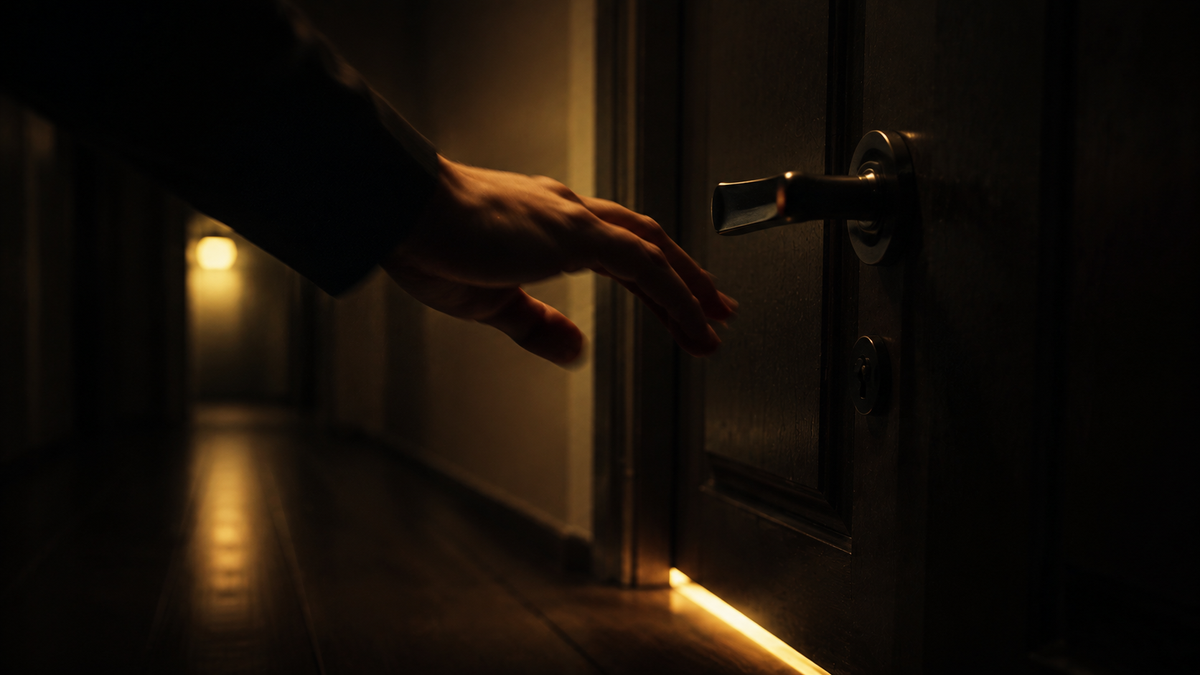
What Is Suspense? How Filmmakers Build It
Suspense is the experience of knowing something bad might happen and being unable to stop it. It is not shock. It is not surprise. It is the sustained, almost unbearable state of waiting — and the filmmaker's job is to create that state deliberately and hold it for as long as the story requires.
Alfred Hitchcock, who spent a career thinking about almost nothing else, defined it precisely: mystery is when the audience knows less than the characters. Suspense is when the audience knows more. That distinction is the key to everything.
The bomb under the table
Hitchcock illustrated his definition with an example he returned to throughout his career. Two people are sitting at a table, talking about baseball. Nothing interesting. Fifteen minutes pass. A bomb goes off. The audience is surprised for fifteen seconds.
Now tell the audience at the start of the scene that there is a bomb under the table and it will go off in fifteen minutes. Run the same conversation. Now every word, every pause, every irrelevant sentence is unbearable. The audience wants to scream at the screen. The scene is fifteen minutes of pure suspense — not because anything changed in what the characters are doing, but because the audience has information the characters do not.
This is the engine of all cinematic suspense. The audience's knowledge creates the tension. The characters' ignorance sustains it.
Suspense vs surprise vs mystery
These three terms are frequently confused and each produces a different audience experience.
Surprise is a sudden event the audience did not anticipate. It produces a short, sharp reaction — a gasp, a jolt — and then it is over. A jump scare is surprise. An unexpected death is surprise. The effect is immediate and brief.
Mystery is withheld information. The audience knows less than the characters, or less than the situation warrants, and they are trying to catch up. Detective fiction operates on mystery. The audience and the protagonist are solving the puzzle together.
Suspense is superior information. The audience knows more than at least one character, and they watch that character move toward a danger they cannot see. The gap between what the audience knows and what the character knows is the source of the tension.
A film can use all three. Hitchcock's *Psycho* (1960) opens with mystery, pivots to suspense during the shower sequence, and delivers surprise at the moment of the attack. What makes it so durable is how precisely each mode is deployed — and how rarely they overlap.
How filmmakers build it
Suspense is not an accident. It is a set of deliberate techniques applied to specific moments in a scene.
Give the audience the information first
The most fundamental technique. Before the scene where the danger occurs, show the audience the danger. The gun in the drawer. The figure on the stairs. The car following two blocks back. Once the audience has seen it, every subsequent moment in that location carries weight. The character does not need to know. The audience does. That asymmetry is the engine.
Control what the camera looks at
The camera is the audience's attention. Where it points determines what the audience knows and what they are made to anticipate. Hitchcock's cameras roam — not randomly, but purposefully, hunting for the thing that will hurt the character. A slow pan across a room that ends on a detail the protagonist has missed tells the audience everything they need to dread what comes next.
Use time against the audience
Suspense is a function of time. The longer the audience is held in the state of knowing-but-unable-to-act, the more intense the experience becomes. The scene must run long enough for the audience to do the arithmetic — to calculate the risk, to imagine the outcome, to invest in the character's survival. Cut away too soon and the tension dissipates. Hold too long without release and it collapses into impatience. The timing is everything.
Delay the inevitable
Once the audience knows the danger, do not deliver it on schedule. Introduce an interruption. Let a third party almost notice and then fail to. Let the protagonist come within one action of safety and then have it taken away. Every delay raises the stakes because it extends the audience's exposure to the tension and deepens their investment in the resolution.
Use sound and silence
Hitchcock understood that silence is one of the most powerful tools in suspense. The absence of music, the absence of ambient sound, the absence of dialogue — all of it tells the audience to pay attention, that something is about to happen. The moment before the attack in *Psycho* is nearly silent. The *The Man Who Knew Too Much* (1956) builds its concert-hall sequence entirely through the relationship between the orchestra's crescendo and the assassin's raised gun. Sound and suspense are inseparable.
What makes suspense collapse
Suspense fails in three consistent ways.
The audience loses track of what they are waiting for. If the threat is not clearly established — if the audience cannot identify the danger and locate it in the scene — the tension has no object. It dissipates into vague unease, which is not the same thing.
The characters act inconsistently with their situation. A character who is supposed to be afraid but behaves casually breaks the audience's belief in the danger. The character's behaviour is the audience's calibration. If the character is not scared, the audience cannot stay scared.
The filmmaker resolves the tension too quickly or too cheaply. A sudden loud noise is not a payoff for fifteen minutes of sustained dread. The resolution needs to be proportional to the tension that preceded it.
Suspense as a camera problem
Every technique described above is ultimately a camera decision. Where the camera goes. What it shows and what it withholds. How long it holds on a detail. When it cuts away. These are not editing choices made in post — they are shot decisions made before a frame is generated.
When filmmakers work in Induce, suspense sequences begin in the script — the information asymmetry, the established threat, the character's ignorance — and the system reads that intent when planning the shot list. Which character has the information. Where the camera needs to be to give the audience the danger without giving it to the character. How the cuts should tighten as the scene approaches its break. The director still makes those decisions. What changes is how directly the script's emotional architecture translates into a shot-by-shot plan.
What is suspense in film?
+Suspense is the sustained experience of knowing something bad might happen to a character who does not know it themselves. It is created by giving the audience more information than the characters and then holding them in that state of superior knowledge while the danger approaches. Hitchcock's definition: mystery is when the audience knows less than the characters; suspense is when they know more.
What is the difference between suspense and surprise?
+Surprise is a sudden unexpected event — brief, immediate, over quickly. Suspense is prolonged anticipation — the audience already knows the danger is coming and watches the character move toward it without knowing. A jump scare is surprise. The fifteen minutes before the jump scare, if done correctly, is suspense.
What techniques do filmmakers use to create suspense?
+The core techniques are: giving the audience information before the characters have it, controlling where the camera looks to reveal or withhold the danger, extending time by delaying the inevitable resolution, and using silence or sound counterpoint to signal that something is about to happen. All of these are camera and editing decisions made at the shot level.
Who is the best filmmaker at creating suspense?
+Alfred Hitchcock is the most studied and most imitated, with a body of work across *Rear Window*, *Vertigo*, *Psycho*, and *The Birds* that still functions as a practical textbook. Contemporary directors who work in the same tradition include David Fincher, whose *Se7en* and *Gone Girl* use sustained information asymmetry with precision, and Jordan Peele, whose *Get Out* applies Hitchcockian suspense to social horror.
Can suspense exist without danger?
+Yes. Suspense requires anticipation and information asymmetry, but the thing anticipated does not need to be physical danger. A conversation where the audience knows one character is lying creates suspense. A scene where the audience knows a relationship is about to end, and the characters do not, creates suspense. The mechanism is the same: superior knowledge, withheld from the character, held long enough for the audience to feel it.
Related posts
What Is a Synopsis? How to Write One That Works
A synopsis is not a summary — it is a sales document that proves your story works. Here is what it must include and how to write one that gets read.
By Ranga Nikhilesh
What Is a Smash Cut? Definition & Examples
A smash cut is an abrupt edit that cuts mid-action to a completely different scene for deliberate effect. Here is how it works and the best examples.
By Ranga Nikhilesh
What Is a Foil in Literature? Definition & Examples
A foil is a character who contrasts with another to reveal qualities neither could show alone. Here is the definition, how it works, and the best examples.
By Ranga Nikhilesh